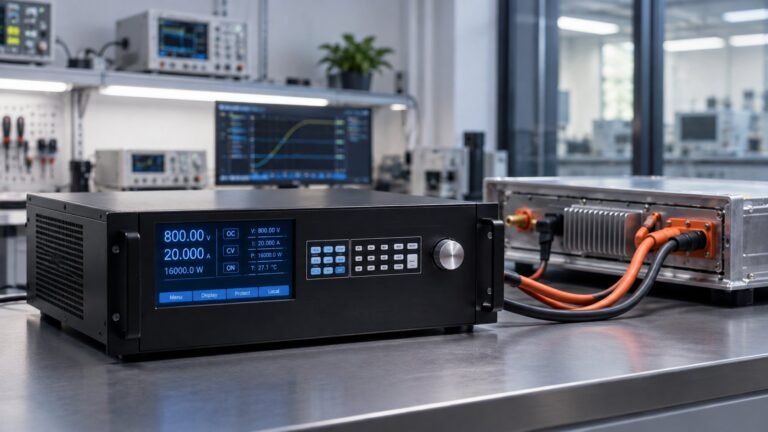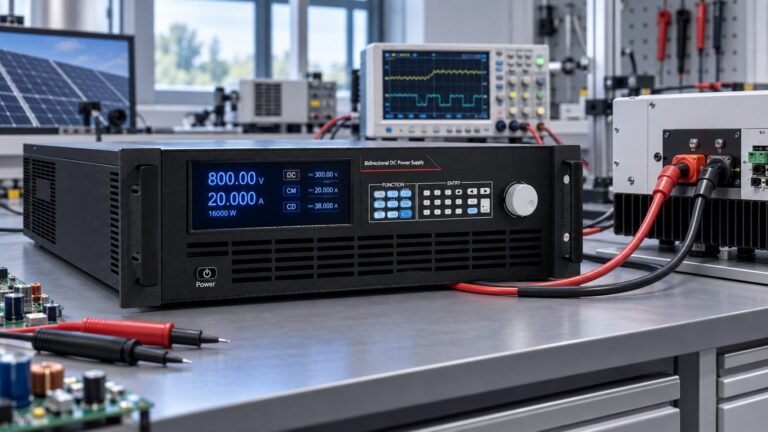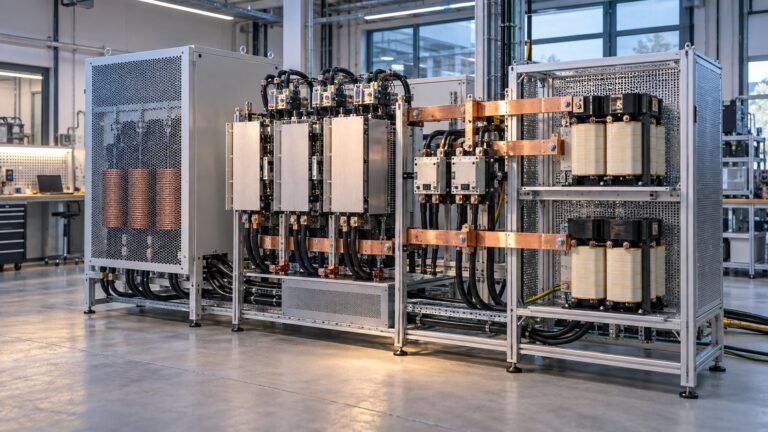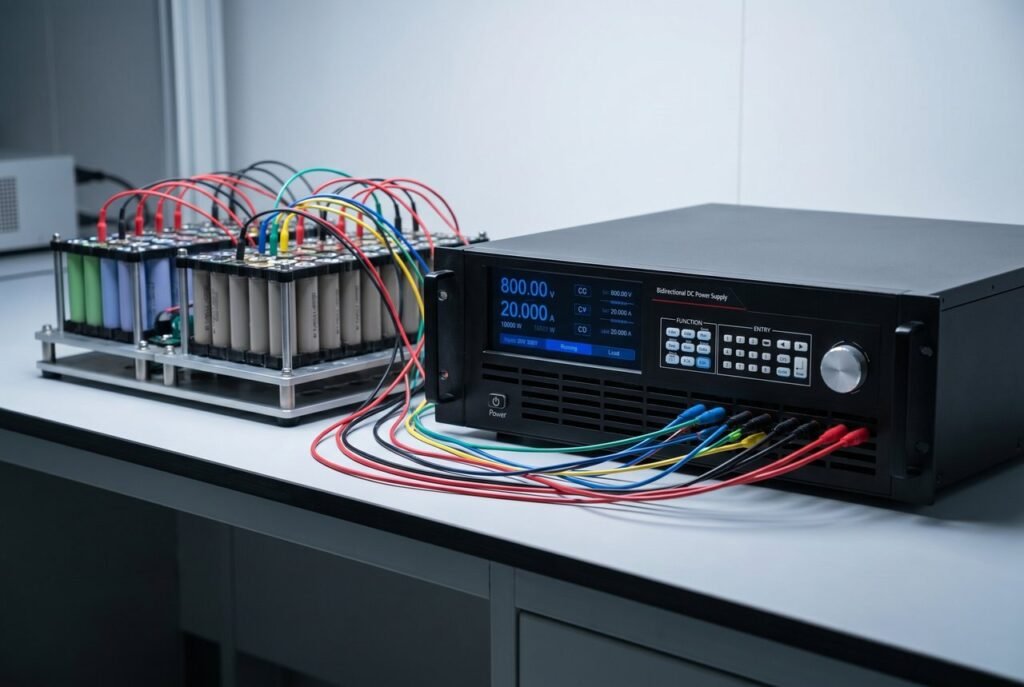
Battery Cell Cycling. High-throughput cell and module cycling with precise SoC and low energy cost.
Why a bidirectional regenerative supply
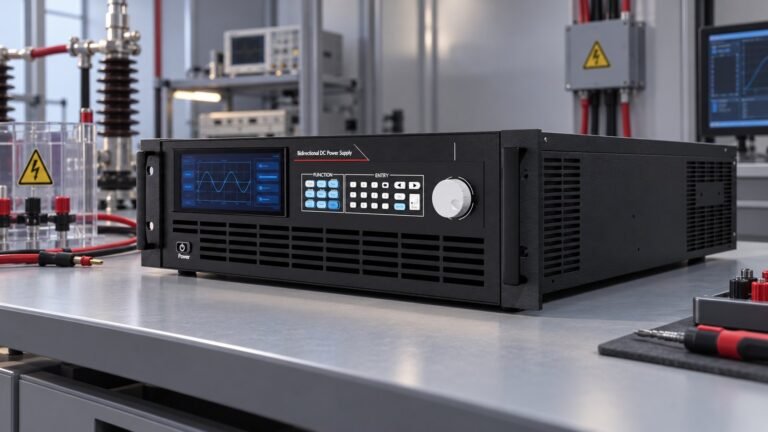
Sourcing and sinking from one instrument removes the separate electronic load, recovers energy instead of dissipating it as heat, and gives seamless dual-quadrant crossover for realistic profiles — with ≤5 ms dynamic response and 0.02% F.S. accuracy.
Recommended platform
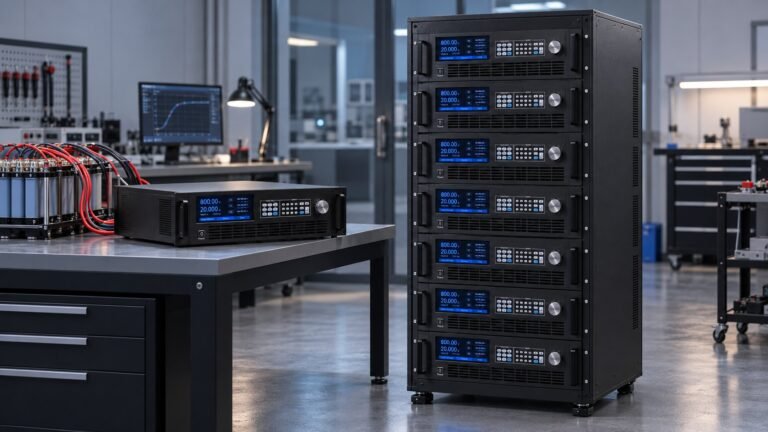
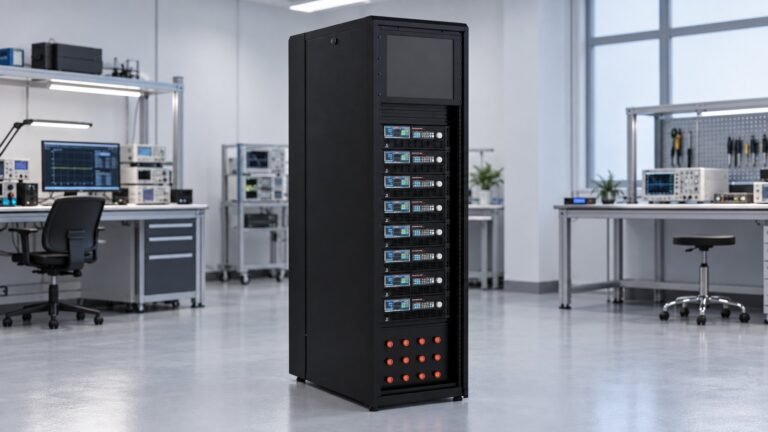
Match the voltage to your bus and the power to your throughput; parallel for higher power. Typical fits:
- 360 V — High-current 360 V class for low-voltage, high-amperage pack and module test.
- 500 V — 500 V class for 400 V-architecture EV packs, DC-DC and motor-drive test.
- 750 V — 750 V class for 800 V EV architectures, chargers and traction inverters.
- 1000 V — 1000 V class for high-voltage EV packs, ESS strings and DC fast charging.
- 1500 V — Flagship 1500 V class for utility PV strings, BESS and grid-scale converters.
- 2250 V — Highest 2250 V class for long PV strings and high-voltage power-electronics test.
Specifications
| Output voltage range | 0 – rated (360 / 500 / 750 / 1000 / 1500 / 2250 V) |
|---|---|
| Output current | Bidirectional ± rated (to 240 A / unit, to 2400 A in cabinet) |
| Output power | Bidirectional ± rated (14 kW–420 kW; MW via parallel) |
| Operating quadrants | Dual-quadrant (source + regenerative sink), seamless crossover |
| Regenerative efficiency | Up to 93% (energy returned to grid) |
| CV setting accuracy | ≤ 0.02% + 0.02% F.S. |
| CC / CP setting accuracy | ≤ 0.1% + 0.1% F.S. |
| Voltage readback accuracy | ≤ 0.02% + 0.02% F.S. |
| Dynamic response | Voltage rise/fall ≤ 5 ms (representative 3U); transient recovery < 4.5 ms (10→60%) |
| Load modes | CC / CV / CP / CR, with CC&CV priority |
| Simulation | Battery (NS81000, 7 libraries + custom) · PV I-V/P-V (NS91000, EN50530/Sandia) |
| Protections | OVP / OCP / OPP / UVP / UCP |
| Power factor | 0.99 |
| AC input | Three-phase 340–480 VAC, 47–63 Hz |
| Interface | LAN / RS232 / RS485 / CAN — SCPI, Modbus-RTU, CANopen |
| Display | 6.8″ LCD |
| Operating environment | 0–50 °C (derate > 35 °C); storage −10–70 °C; < 2000 m; 5–90% RH non-condensing |
| Standards / quality | CE · IEC 61010-1 · ISO 17025-traceable calibration (on request) |