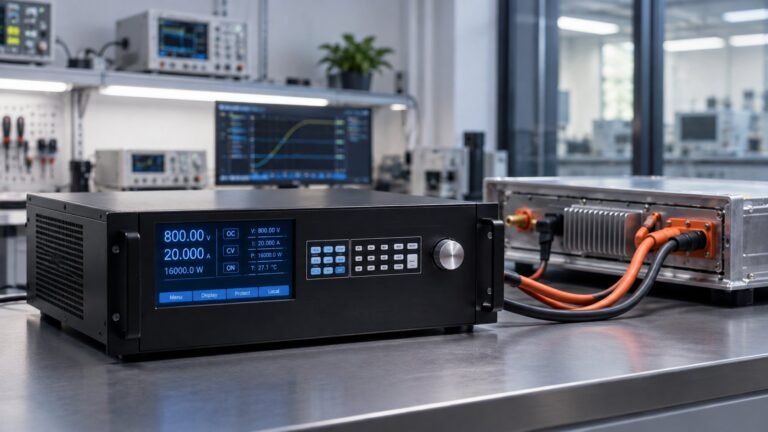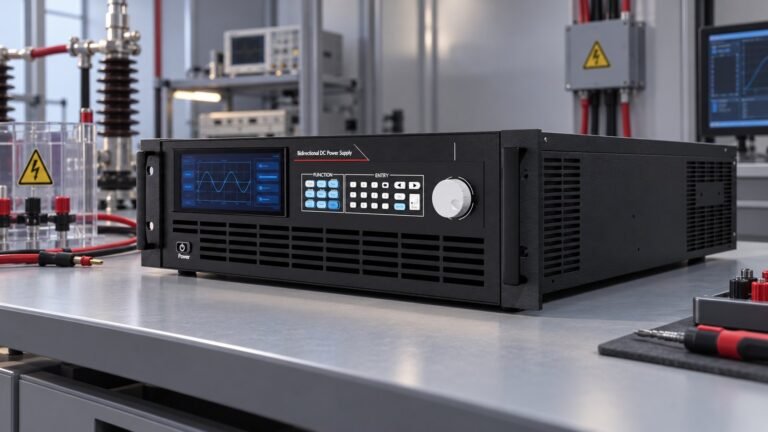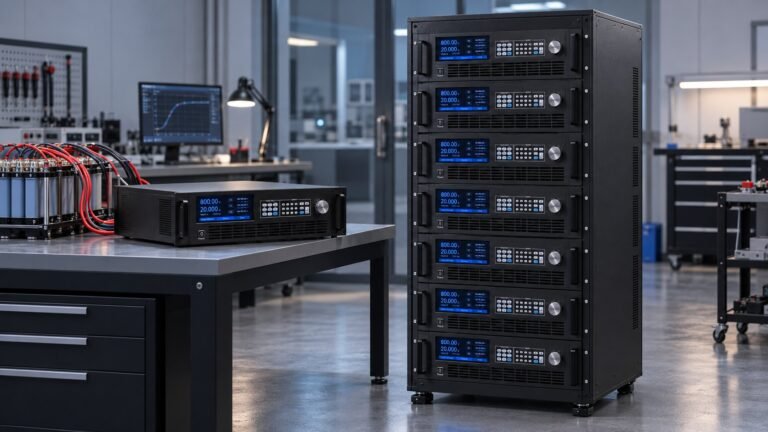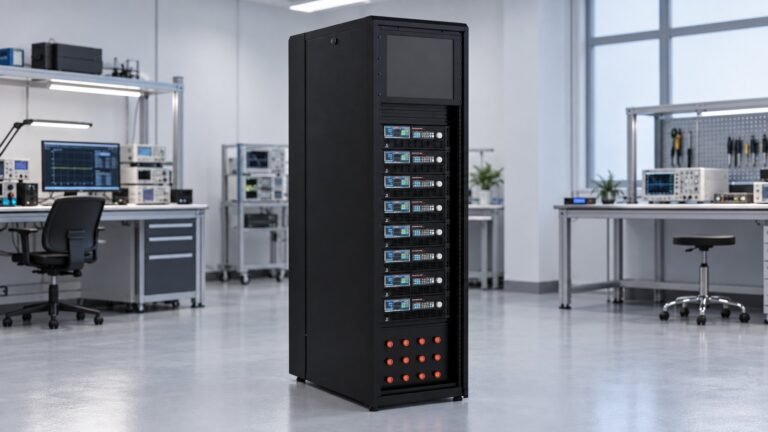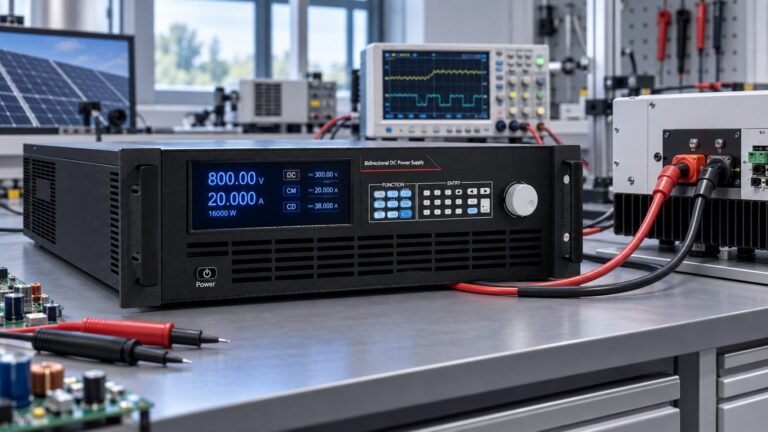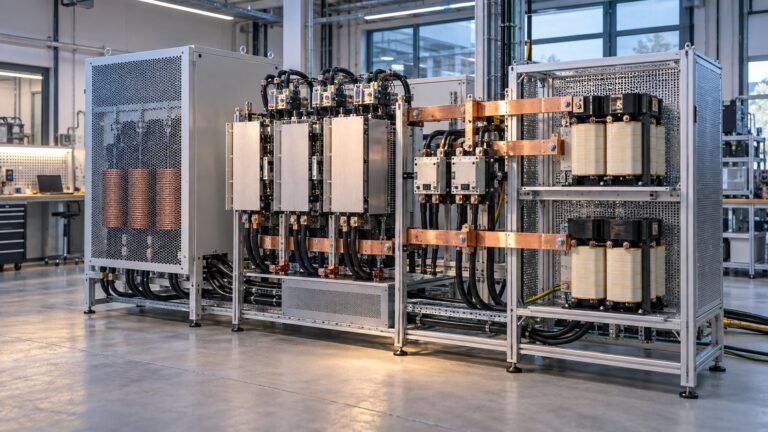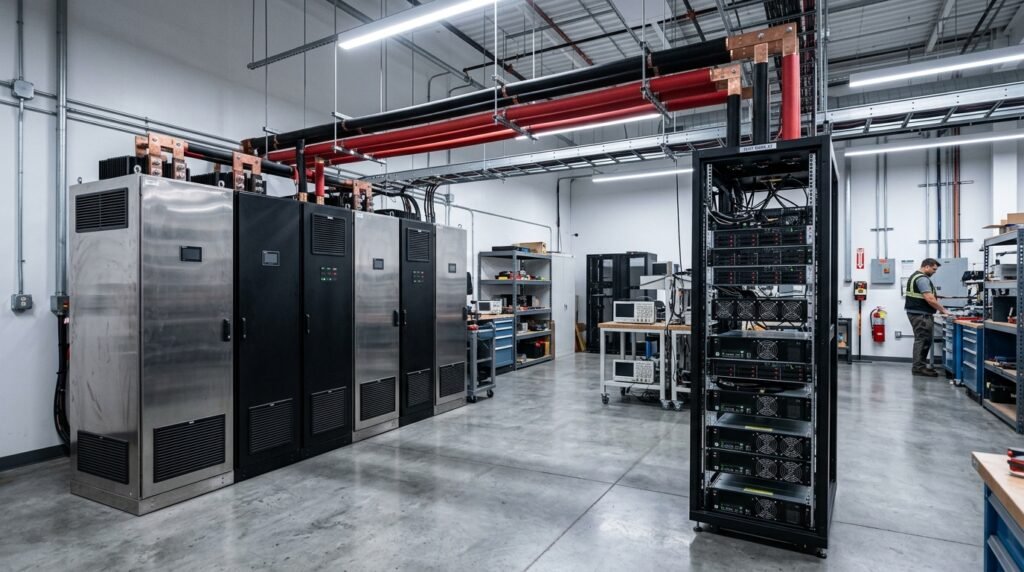
800V DC data center testing is becoming its own bench category. AI racks are moving from 54 V in-rack distribution to 800 VDC feeds, and the shift is happening on a fixed timeline — NVIDIA is targeting full-scale 800 VDC deployment for 2027. On 15 September 2026, Tektronix launched the EA-ELR 21000, a regenerative test system built specifically for this voltage class. If your lab still validates AI power hardware on 54 V or 400 V gear, that bench is about to be the wrong tool for the job.
This piece covers what’s driving the new voltage class, what the first purpose-built regenerative tester tells you about the spec, and how to size a bench for AI rack validation without over- or under-shooting the requirement.
Why AI Racks Are Forcing 800V DC Data Center Testing
NVIDIA’s 800 VDC architecture converts 13.8 kV AC grid power straight to 800 VDC at the site perimeter, then feeds racks through two-conductor 800 V busways instead of 54 V busbars, according to NVIDIA’s developer blog. The payoff is physical: copper requirements drop by up to 45% compared with 415 V AC distribution, and end-to-end power efficiency improves by roughly 5%. Rack power is set to scale from 100 kW today to more than 1 MW as full-scale 800 VDC deployment lands in 2027.
That scaling curve is what changes your bench. A 54 V rack tester tells you nothing about an 800 V feed carrying megawatt-class transients. 800 VDC power architecture testing has to cover the full span — steady-state loading, fast load-step recovery, and energy recovery when a GPU cluster throttles back in milliseconds. None of that existed as a rack-level requirement two years ago.
What the Tektronix EA-ELR 21000 Launch Signals
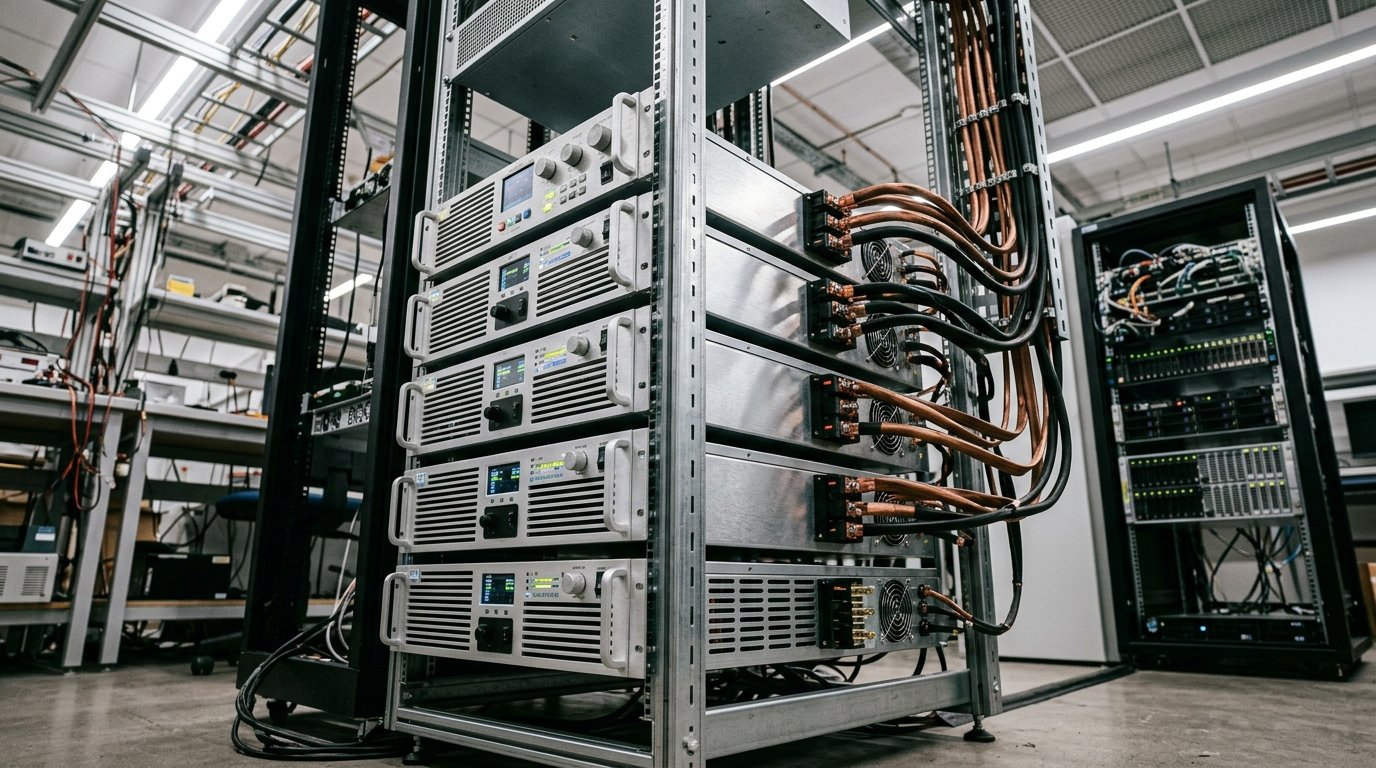
Test equipment vendors don’t build new flagship platforms speculatively. On 15 September 2026, Tektronix introduced the EA-ELR 21000 as a fully regenerative dynamic test system for 800-volt AI data center power. Each module delivers 30 kW at up to 1000 V and 80 A, and the platform scales modularly to 1.92 MW for full-rack and multi-rack validation.
Two figures in that release matter more than the headline power number. First, up to 95% regenerative efficiency — energy pulled from the device under test goes back to the grid instead of into resistive loads and extra cooling. Second, a 12 A/µs slew rate at 240 kW, the number that actually proves a bench can follow GPU load steps rather than just source steady current. That combination is the shape of AI data center power supply testing now: high regen efficiency, fast slew, and headroom above the 800 V rail.
See also: Regenerative Load vs Electronic Load: Key Differences
Sizing a Bidirectional DC Supply for AI Rack Test Benches
Specify a bidirectional DC supply for AI racks around three numbers: voltage headroom, slew rate, and regenerative efficiency. Ultra Power Systems’ bidirectional & regenerative DC power supplies span 360 V to 2250 V classes — the 1000 V tier is the one built for this rack voltage.
Voltage headroom and transient response
We build our 1000 V-class units to sit just above the 800 V rail, not exactly on it. That headroom matters for two reasons. It keeps you inside safe operating margin when a GPU cluster pulls a fast load step and the bus sags or overshoots, and it lets one platform cover both today’s 800 VDC feeds and the higher-voltage variants some data center vendors are already piloting. A bench specified exactly to 800 V leaves you re-buying gear the first time a customer asks for margin testing at 850 V or 900 V.
Paralleling the way EV benches already do
Rack power is scaling past 1 MW, and no single module gets you there. The fix is the one test labs already use on megawatt EV and battery benches: parallel multiple bidirectional units on a shared bus and scale power in fixed steps instead of re-engineering the bench for every rack size. We won’t repeat the paralleling mechanics here — see our EV & Battery Pack Test Power Supply page for how that’s configured — the principle carries straight across to 800 VDC AI racks.
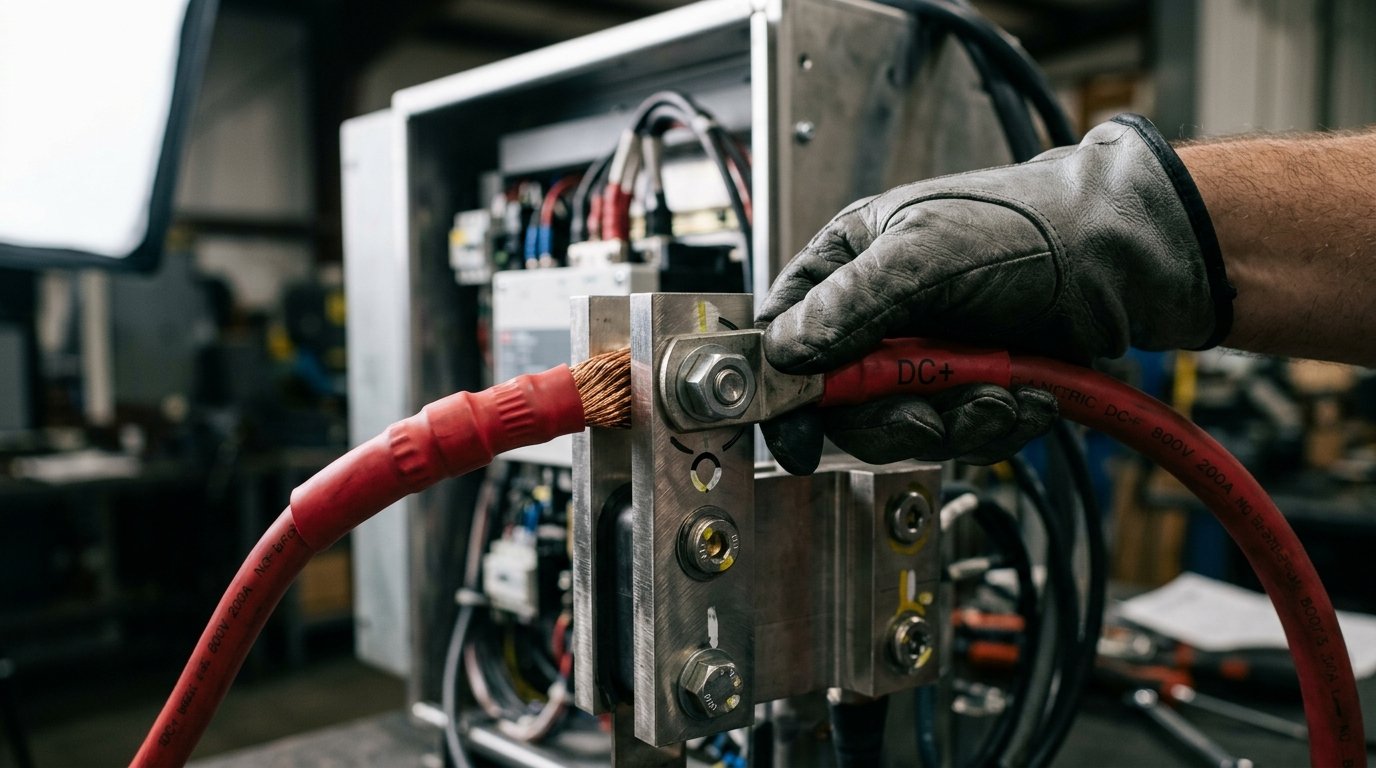
See also: regenerative dc bidirectional source and sink
Bench Parameters to Set Before You Spec a Regenerative DC Test System 800V
Before you request a quote, get these numbers from the rack vendor or the GPU power spec sheet:
- Bus voltage range and margin — for example 750–900 V — confirms your supply’s headroom above the 800 V nominal rail.
- Peak and continuous current per feed, at rack scale from 100 kW to 1 MW and beyond.
- Load-step size and required slew rate — Tektronix’s own reference point is 12 A/µs at 240 kW.
- Regenerative efficiency target — anything sourcing and sinking megawatt-class power should recover energy, not dump it as heat.
- Ripple and noise limits for the DC bus — check definitions in our Spec Glossary if you’re unsure which figure your test plan needs.
- Paralleling headroom — how many modules you need today, and how many rack sizes out you want to plan for.
Get these six numbers before you spec anything, and the platform choice — module count, voltage class, regenerative efficiency — falls out of the answers instead of being guessed.
FAQ: 800V DC Data Center Testing
Is 800V DC data center testing different from EV bench testing?
The physics overlaps — both are bidirectional, high-power DC. The difference is duty cycle. AI racks pull short, fast load steps tied to GPU compute bursts, not the longer charge and discharge profiles of EV packs. Your bench needs the slew rate for that, not just the voltage and current rating.
What voltage class covers 800 VDC AI rack testing with margin?
A 1000 V-class bidirectional supply gives you headroom above the 800 V nominal rail for transients and margin testing, without moving up to a class built for a different application.
Do I need a regenerative supply, or is a standard bidirectional unit enough?
For megawatt-class racks, yes. Tektronix’s own EA-ELR 21000 is rated up to 95% regenerative efficiency at this scale — sinking that much power resistively isn’t a realistic cooling or energy budget for most labs.
Where This Leaves Your Test Bench
800V DC data center testing is now a defined bench requirement, not a future one. NVIDIA’s 2027 deployment target and Tektronix’s September 2026 launch both confirm the same point: AI racks need bidirectional, regenerative test power at the 800 V class, with margin and slew rate to match. Our 1000 V Bidirectional DC Power Supplies sit above the 800 V rail with the transient response and paralleling path this rack class needs — request a spec review before you commit to a platform →
Can an 800 VDC power shelf system ship and commission within six months in the US?
Yes, a six-month deployment is achievable when the system is a stocked 1000 V-class platform with a committed 16-week ship date and a four-week commissioning window.
Require the quote to identify module availability, controls integration, protection hardware, and factory-acceptance testing; a six-month schedule is not credible if those items remain engineering deliverables after purchase order.
What power supply size is needed for a 1 MW 800 VDC server rack?
A 1 MW rack at 800 VDC requires 1,250 A continuous, before conversion losses, transient margin, or future expansion.
Specify at least 1.1 MW of usable DC capacity—about 1,375 A at 800 V—and divide it across paralleled bidirectional modules so one module can be removed without taking the rack test offline.