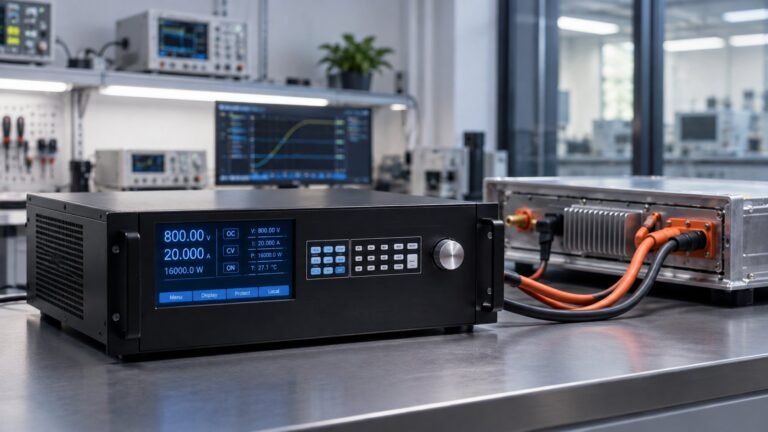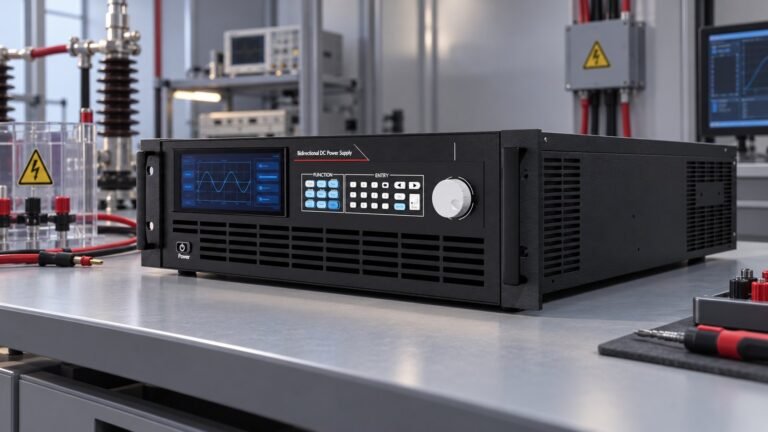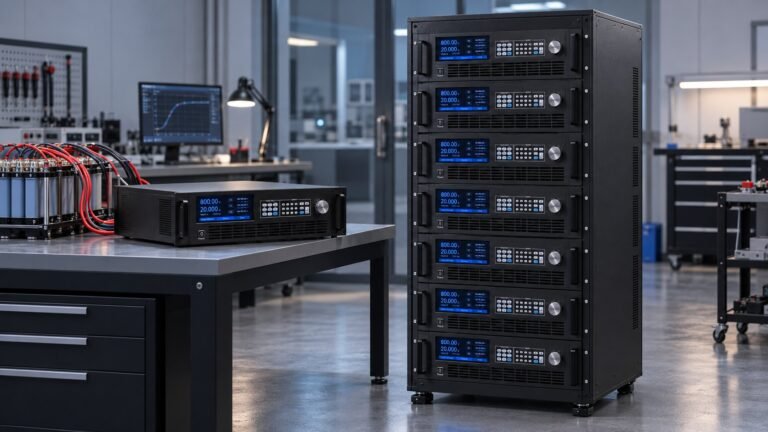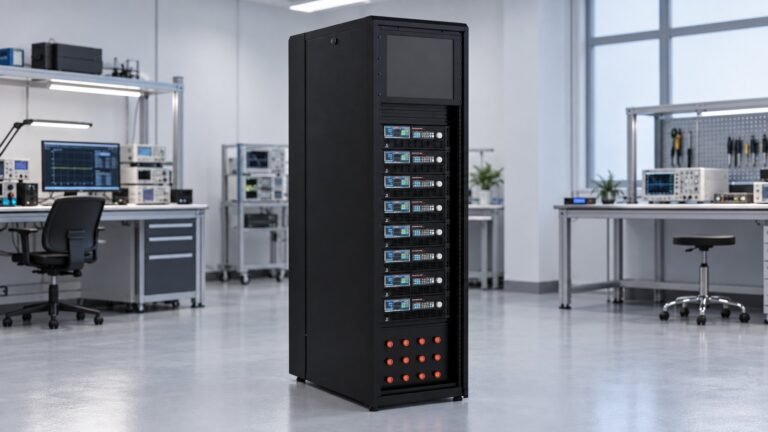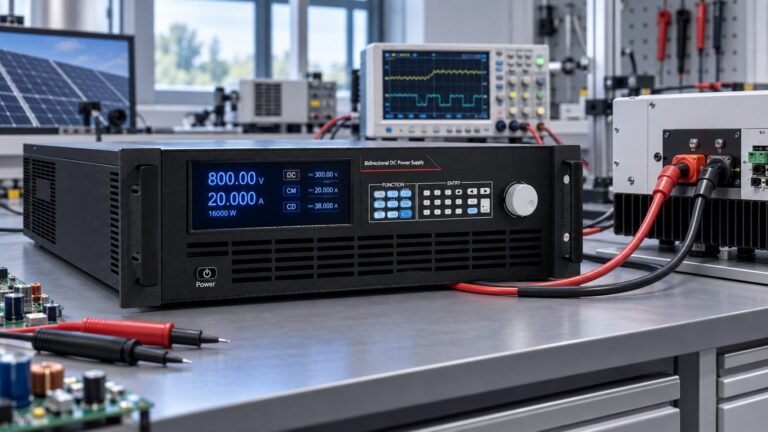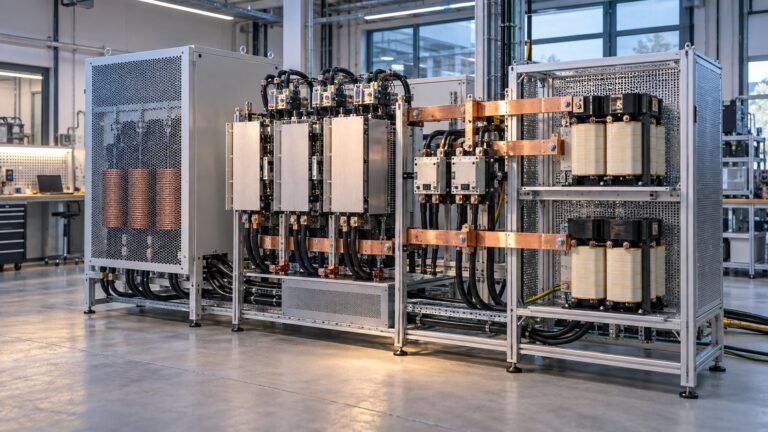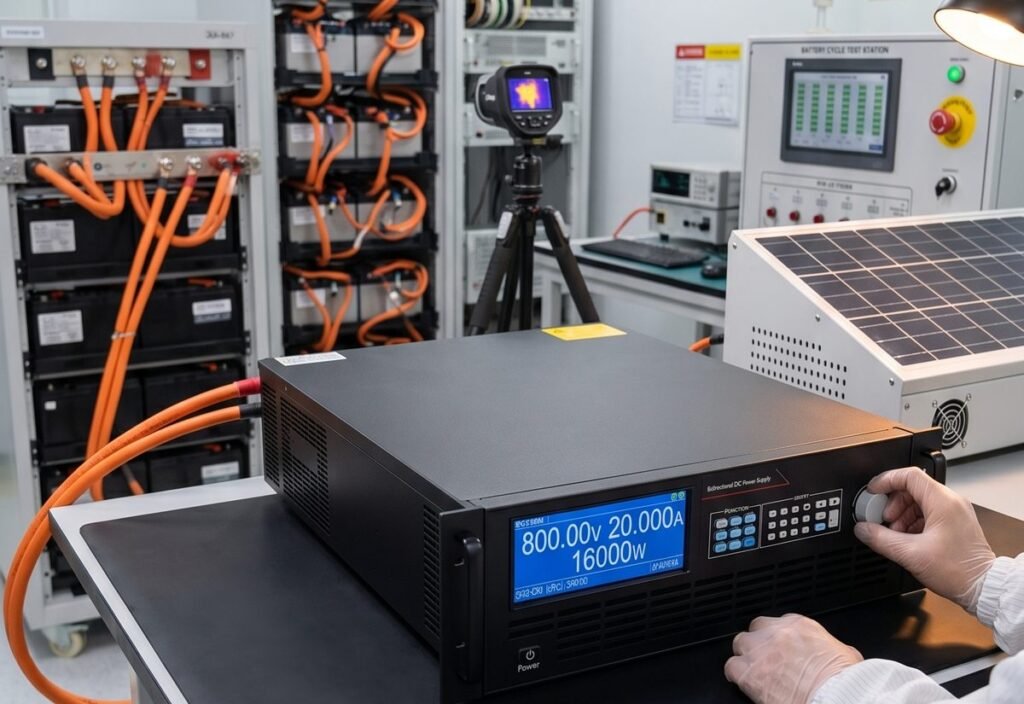
The terms are used interchangeably: both make a power supply behave like a battery so you can test chargers, BMS and converters without a real pack. The N35500 with NS81000 provides 7 standard model libraries plus custom measured curves.
What it models
State of charge, open-circuit voltage and internal resistance over the charge/discharge range — repeatable, safe and faster than cycling a physical cell.
Why bidirectional is required
A real battery both delivers and accepts current, so a credible emulator must source and sink — exactly what a bidirectional regenerative supply does.
See also: solar array simulator
See also: ultra power solutions
What is the difference between a battery tester and a battery emulator?
A battery tester measures or cycles a real cell or pack, while a battery emulator reproduces the pack’s electrical behavior with a programmable source and load. For example, a 400 V, 100 A emulator can present controlled pack voltage and current without exposing the test bench to a physical high-voltage battery.
Use the tester when cell or pack measurements are the objective; use the emulator when the charger, BMS or converter is the device under test and repeatable electrical conditions are more important than electrochemical aging.
When should you use a battery simulator for EV testing?
Use a battery simulator when an EV component must be tested across repeatable voltage, current and state-of-charge conditions without charging and discharging a physical pack. A lab can repeat the same 10-step profile across multiple units while changing limits or fault conditions between runs.
For pack-level work, define the simulated operating window explicitly—for example, 250 to 450 V with a 100 A maximum source and sink current—so the simulator’s limits match the intended vehicle or battery system.