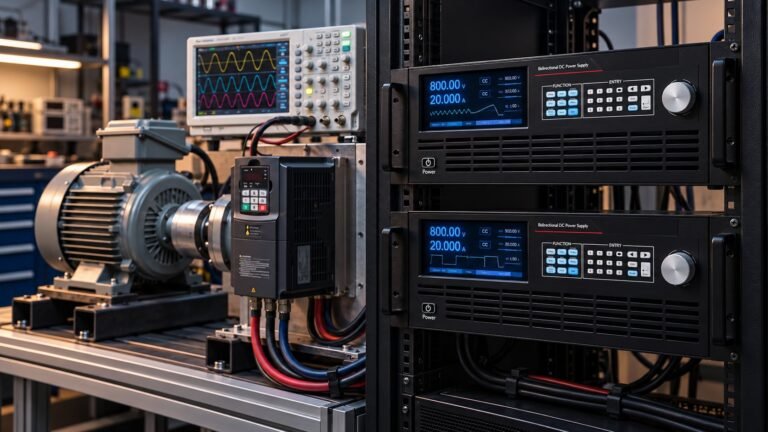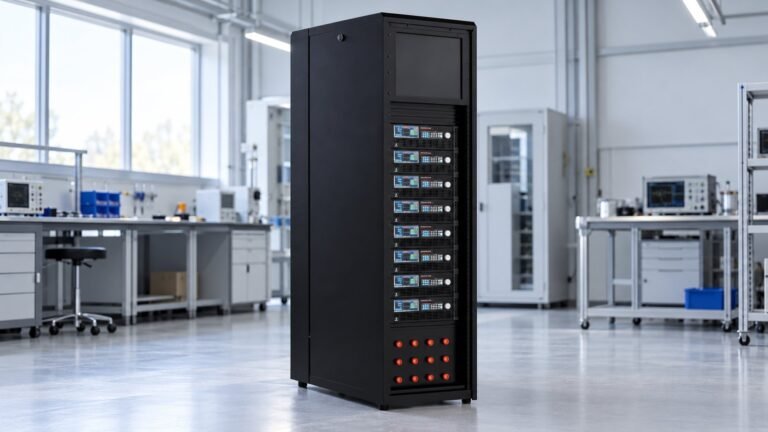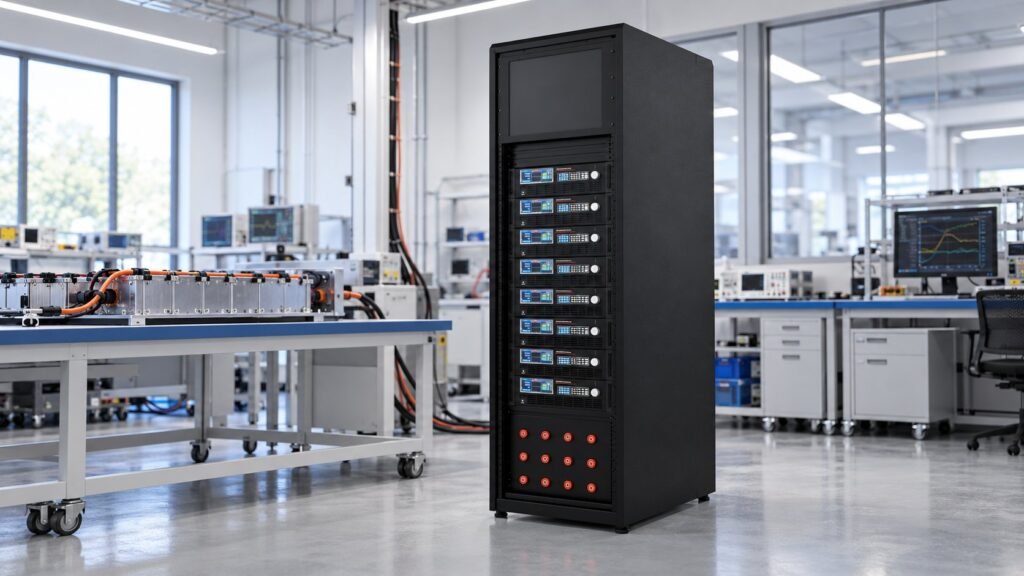
On 16 September 2026, EN 18060:2025 became the published harmonised reference supporting Regulation (EU) 2023/1542. A battery pack test power supply should therefore run traceable EV pack, module and battery measurements, not just display voltage. Your record must yield Ah, Wh, W, Ω and % values tied to a real pack trace.
The European Commission’s guidance points to 18 February 2027 for Battery Passports on EV and industrial batteries above 2 kWh. The practical task is to connect each required data point to synchronised instrumentation, calibration evidence and a measured pack profile. I write this as Ashkan, power supply engineer at Ultra Power Systems.
What did the 16 September 2026 decision change?
Commission Implementing Decision (EU) 2026/2048 published EN 18060:2025 as a harmonised standard supporting Regulation (EU) 2023/1542. Article 1 publishes the standard reference in the Official Journal. The decision’s conformity context relies on Article 15(3), which gives a presumption of conformity only for requirements covered by the harmonised standard.
AENOR’s EN 18060:2025 listing covers performance and durability measurements for EV batteries, modules and packs. Its named metrics include rated capacity in Ah, rated power in W, internal resistance in Ω and energy round-trip efficiency in %. The scope includes Li-Ion, Na-Ion, Pb, NiMH and combined chemistries used in road vehicles.
Which Battery Passport deadline matters?
The European Commission’s Guidance to support preparations for the Digital Batteries Passport states that each EV battery and each industrial battery above 2 kWh placed on the market or put into service needs a Battery Passport from 18 February 2027. The guidance organises 71 data points, but it does not replace your underlying test records.
See also: UL 9741 Testing for V2G Power Export
What must a battery pack test power supply record?
A battery pack test power supply must preserve the pack identity, test conditions, synchronised electrical trace and derived results in one controlled record. Capture voltage and current versus time together with SOC, temperature, direction, cycle count and calibration status.
| Record field | Capture on the test bench | Why it matters |
|---|---|---|
| Pack identity | Pack serial number, configuration and test date | Binds every result to the tested hardware |
| Electrical trace | Voltage and current against one time base | Supports Ah, Wh, W and efficiency calculations |
| Operating state | SOC, temperature in °C, charge or discharge direction and cycle count | Makes the result reproducible and comparable |
| Measurement assurance | Calibration status, instrument IDs and applicable certificates | Shows whether the trace was measured under controlled conditions |
| Passport-ready outputs | Rated capacity in Ah, energy in Wh, rated power in W, resistance in Ω and efficiency in % | Provides the resulting performance data fields |
Treat EU battery passport performance data as a chain of evidence, not a collection of manually typed values. Store the raw trace, calculation method, unit conversions and review status with the record. If the current channel and pack temperature are not time-aligned, the resulting Ah, Wh, Ω and % values are harder to defend.
How should you map EN 18060 measurements to the bench?
Map each EN 18060 metric to a controlled electrical action and a stored result. That is the difference between an EV battery durability test power supply and a generic DC source: the bench must execute reversible profiles while preserving the evidence needed to calculate performance and durability.
| EN 18060 metric | Unit | Bench operation | Acceptance output |
|---|---|---|---|
| Rated capacity | Ah | Controlled charge or discharge with integrated current over time | Ah result linked to pack serial and SOC window |
| Rated power | W | Time-aligned voltage and current during the defined power profile | W result with peak, duration and direction |
| Internal resistance | Ω | Defined pulse or internal resistance test at recorded SOC and temperature | Ω result with test conditions and trace |
| Round-trip efficiency | % | Integrate charge and discharge energy using the selected EN 18060 procedure | % result from Wh in and Wh out |
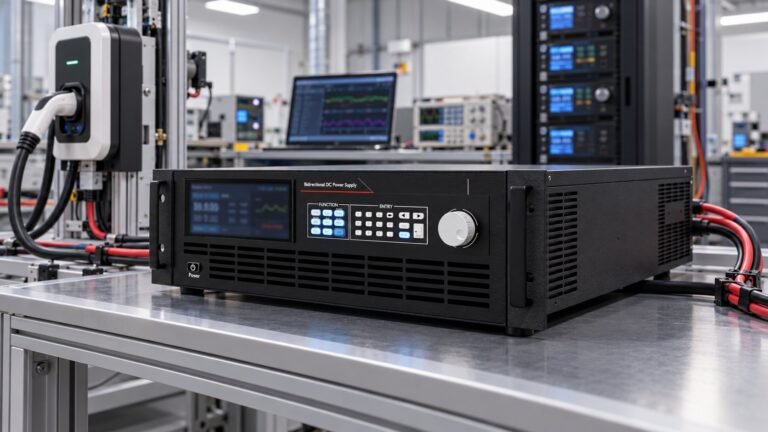
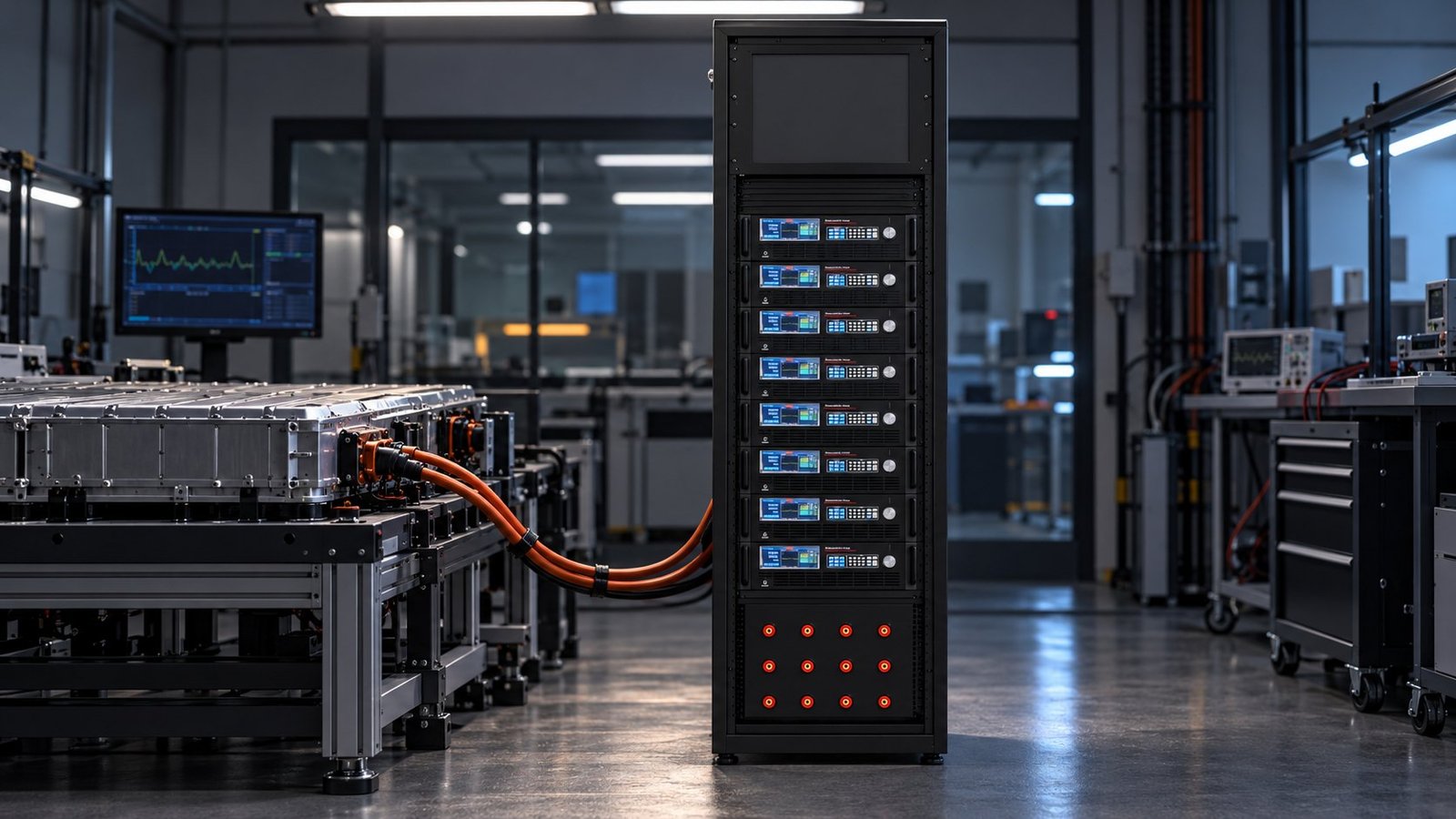
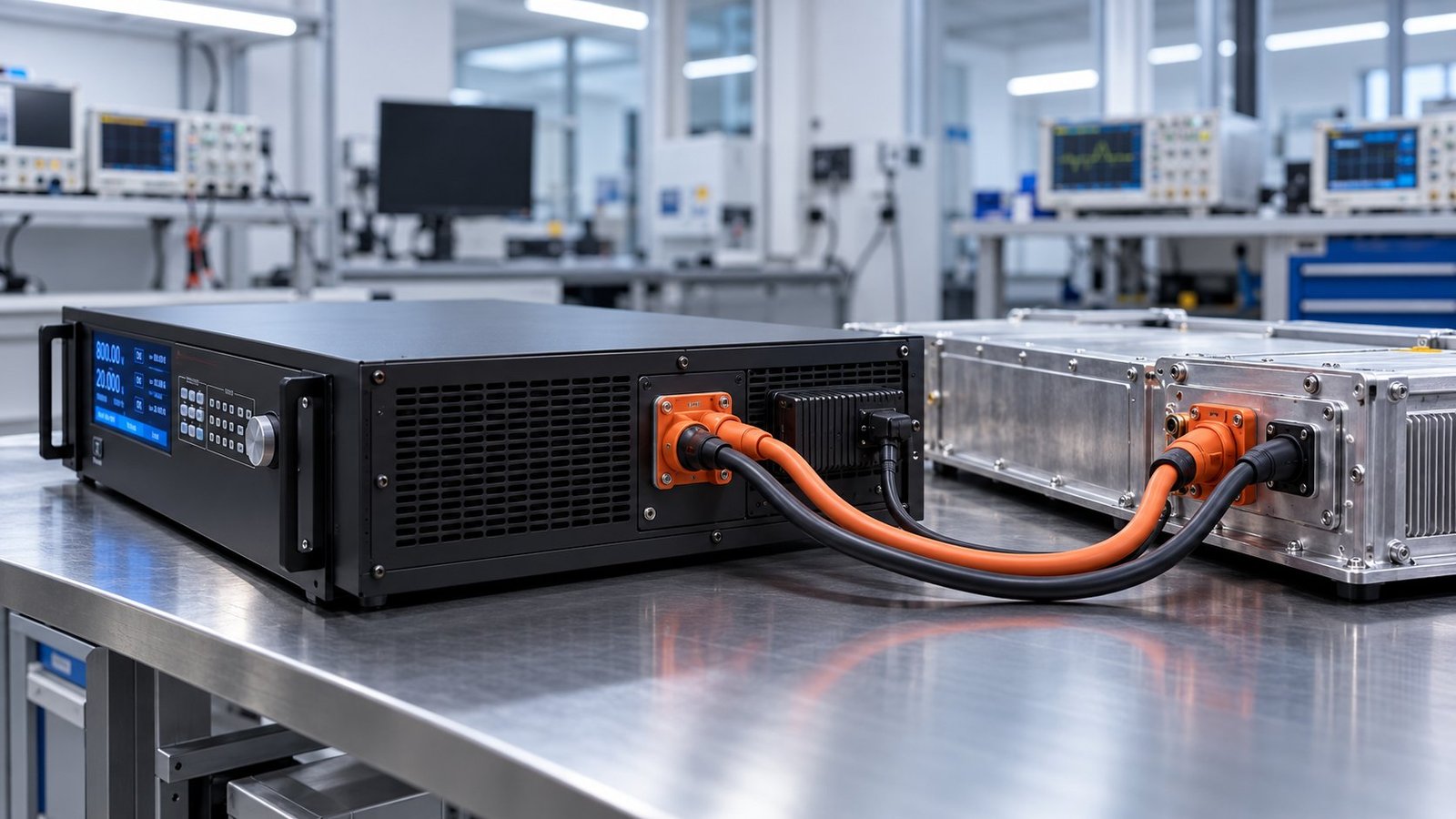
Ultra Power Systems supplies bidirectional and regenerative DC power supplies in 360, 500, 750, 1000, 1500 and 2250 V classes. Current capability reaches 240 A per unit and 2400 A in a cabinet. Representative dynamic response is ≤5 ms, with stated CV accuracy of ≤0.02% + 0.02% F.S. These figures define the instrument-side envelope, not the pack result.
Specify the voltage class and current envelope before freezing your test profile. The High Voltage DC Power Supply Selection Guide is the next useful reference when your operating window is still being defined.
For controlled regenerative discharge, your bench may also need a regenerative dc electronic load. If returned energy must be routed back to the facility supply, review the ac dc regenerative converter commissioning requirements before the test campaign.
See also: ac and dc converter
What should your acceptance test look like?
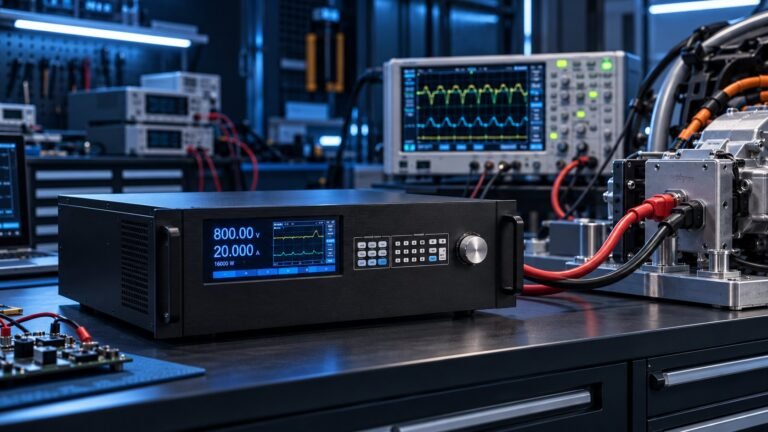
Require one measured Ultra test trace from the real pack. The trace should show the pack serial number, voltage and current versus time, SOC, temperature in °C, charge or discharge direction, cycle count, calibration status and the resulting Ah, Wh, W, Ω and % values.
- Bind the identity. Record the pack serial number, configuration and test file ID before energising. Failure mode: a valid trace assigned to the wrong pack.
- Verify measurement status. Check voltage, current and temperature channel IDs, calibration dates and certificate status. Failure mode: an expired or unmatched calibration record.
- Run the defined profile. Log voltage, current, SOC, temperature, direction and cycle count on one time base. Failure mode: timestamp skew that corrupts power or efficiency calculations.
- Calculate the results. Integrate current for Ah, integrate electrical power for Wh, derive W from the defined profile and complete the internal resistance test at its recorded SOC and temperature. Failure mode: a result without the conditions needed to reproduce it.
- Review the evidence. Attach the raw trace, calculations, calibration status and reviewer decision to the passport data record. Failure mode: a polished datasheet being mistaken for compliance evidence.
A marketing datasheet describes the power supply’s capability. Compliance evidence shows what your identified pack did, under which profile, with which instruments and at which temperature. Article 15(3) does not turn a generic voltage screenshot into conformity evidence. Keep the supply specification and the measured pack record separate, then link them by test ID.
FAQ: EN 18060 and Battery Passport test records
Does a Battery Passport replace the test record?
No. The Battery Passport presents required information, while the test record supports the values entered. Preserve the trace, conditions, calculations and calibration status behind each reported result.
Is a power supply datasheet enough for EN 18060 battery testing?
No. A datasheet can show a 1500 V class, 240 A capability, ≤5 ms response or stated CV accuracy. It cannot prove the Ah, W, Ω or % performance of your real pack.
What should you request from the supplier?
Request the operating envelope, response specification, accuracy statement, synchronised logging method, calibration process and one measured Ultra test trace showing passport-ready outputs.
Build the bench around passport-ready evidence
EN 18060:2025 makes the measurement chain part of your engineering decision. Choose a bidirectional class that covers the pack voltage and current, then require synchronised traces, controlled SOC and temperature records, calibration status and calculated Ah, Wh, W, Ω and % outputs. Review our DC power supply range and specify the trace your Battery Passport process needs →