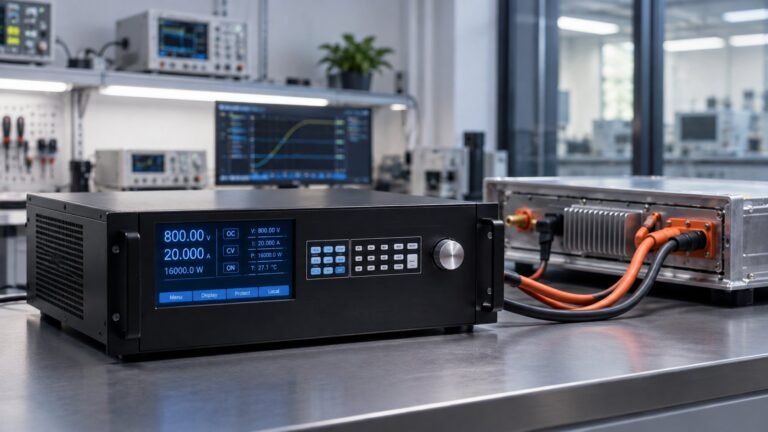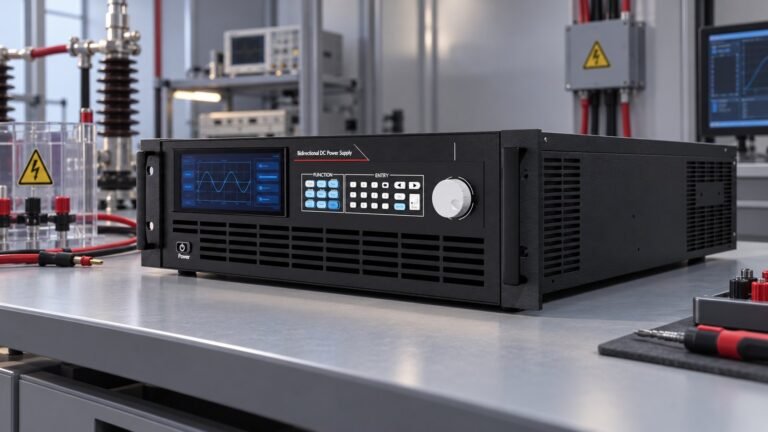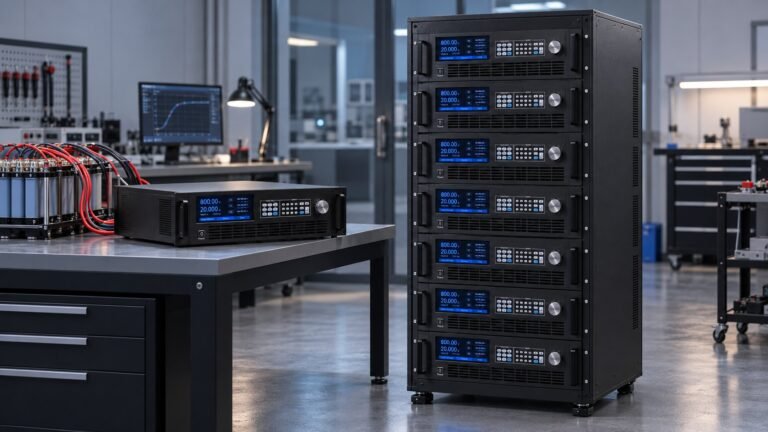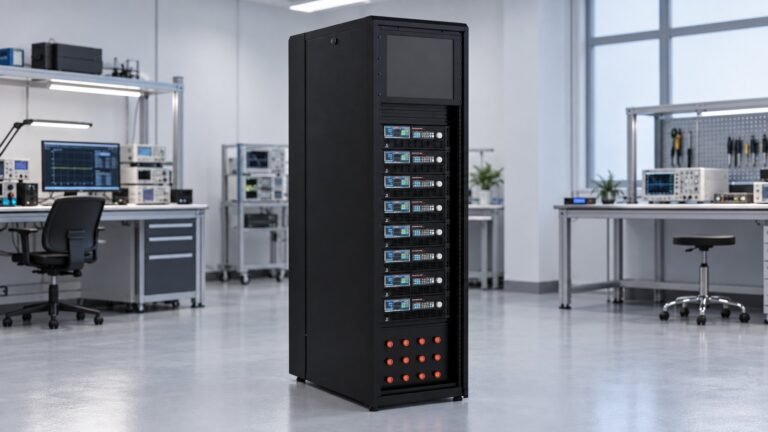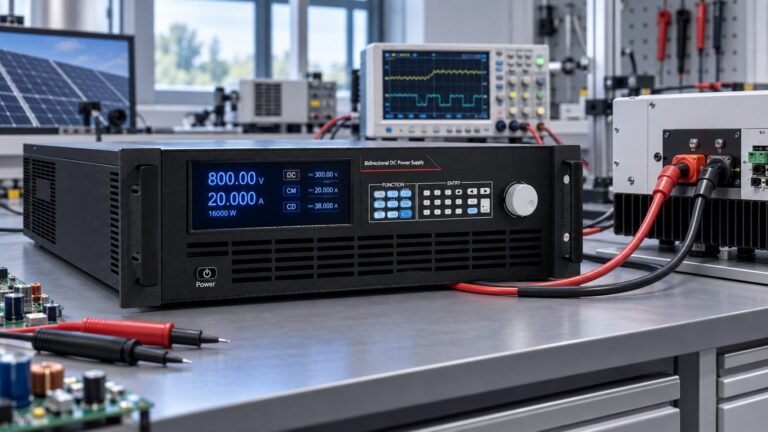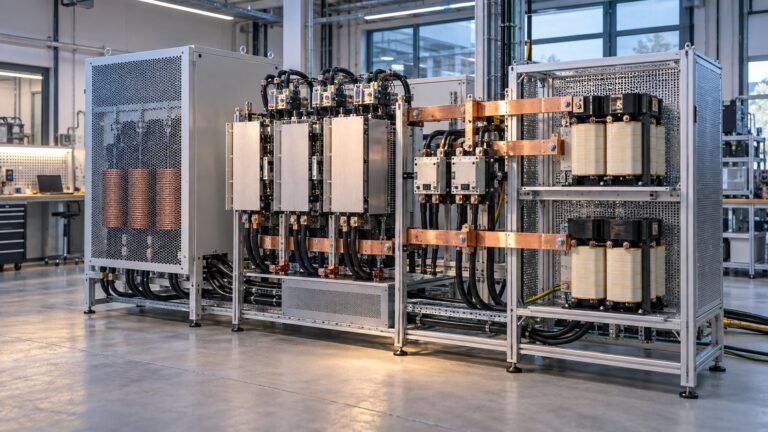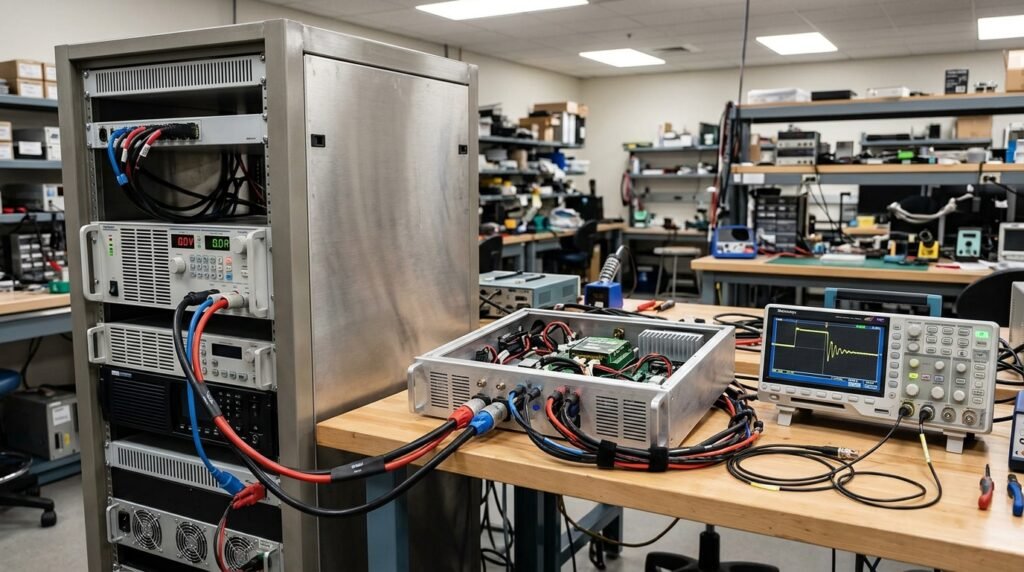
An LV123 LV148 test power supply needs two things a standard bench supply lacks. It has to slew voltage fast enough to fake a real automotive transient. And it has to sink the current the DUT pushes back, not just source it. LV123 covers medium- and high-voltage automotive components — DC/DC converters, on-board chargers, inverters, battery packs. LV148 covers the 48V components that sit alongside them on the same vehicle platform.
Both documents are OEM-controlled. They aren’t public. Every lab works from a supplier’s interpretation instead — TestEquity’s write-up on ITECH’s IT6000C and Intepro’s LV123/LV148 insight page are two of the few references you can actually read. That gap between the standard and what suppliers publish is the real headache when you spec a bench.
Specifying an LV123 LV148 Test Power Supply
LV123 is the electrical test standard written by major European automakers for medium- and high-voltage automotive components. It sets pass/fail parameters for DC/DC converters, on-board chargers, inverters and battery packs. The goal is comparability. One EV programme’s test results should mean the same thing as another’s.
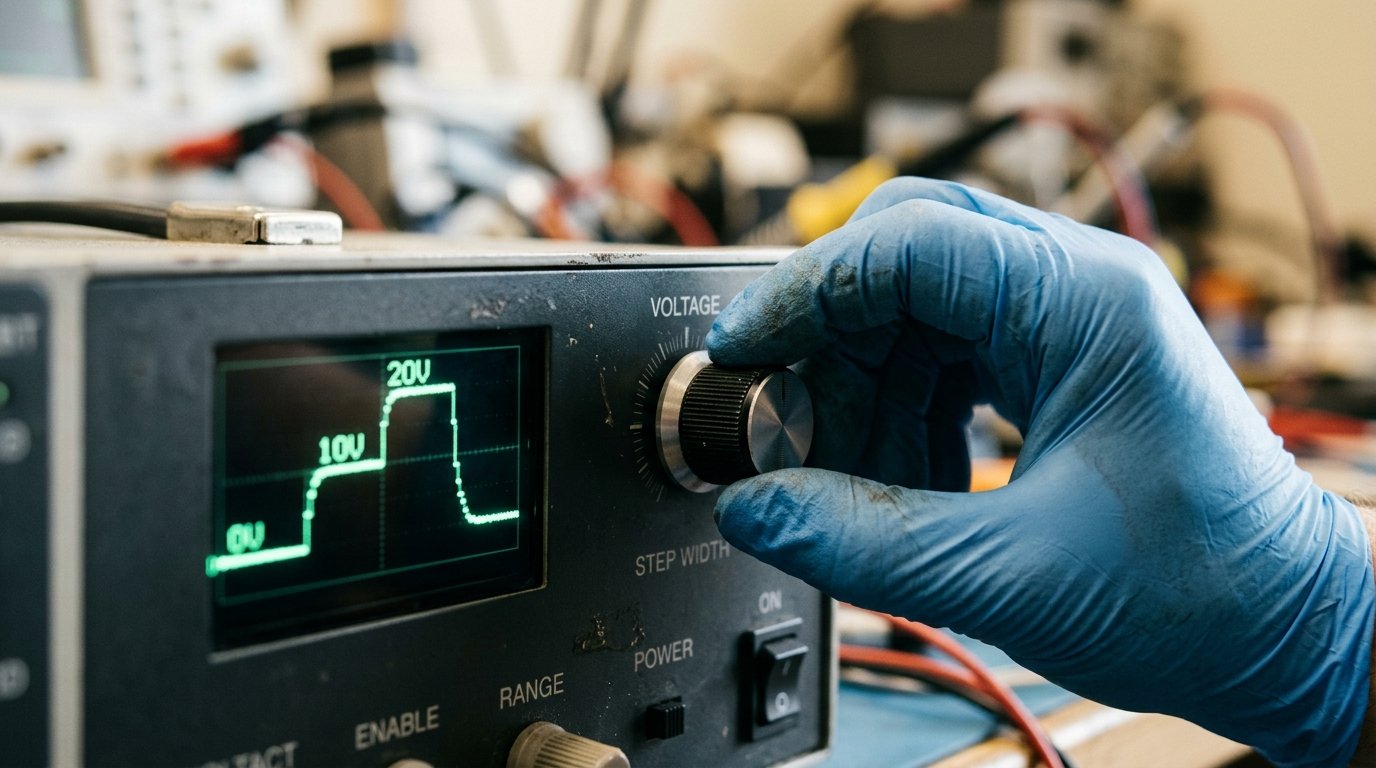
LV123 voltage window testing steps the DUT rail up and down inside defined voltage bands and holds it there while the DUT draws current. Then it layers on power-fluctuation profiles that mimic load dumps and supply sag. TestEquity’s ITECH write-up and Intepro’s LV123/LV148 page both cite CV dynamic response requirements up to 180 V/ms for these transitions.
Most catalogue supplies are tuned for steady-state accuracy, not for slewing that fast without overshoot. That’s a different design brief entirely, and it’s where a lot of first-time LV123 quotes go wrong.
See also: MCS Charger Test Power Supply: What IEC TS 63379 Fixes
LV148 and the 48V Test Bench
LV148 was drawn up by the same group of European automakers once they standardised on a 48V mild-hybrid architecture. It covers electrical and electronic components running on that rail — lighting, wipers, audio units, and the DC/DC converters tying the 48V and 12V systems together.
A LV148 48V system test bench has to reproduce its own transient and ripple envelopes. These are separate from LV123’s window and fluctuation profiles. TestEquity’s ITECH write-up notes the IT6000C’s auto-range output — 80V/450A/15kW from a single 3U unit — as one way to cover both component-level tests and a full 48V system simulation. No hardware swap needed.
See also: iso 15118-23
Why Standard Supplies Fail — and Why Bidirectional Wins
A unidirectional source only pushes current out. It has no discharge or sink half. When an LV123 profile calls for the rail to drop fast, a one-way supply can’t force it down. It can only stop sourcing and wait for the DUT’s own load to bleed the rail. That’s slow, and it isn’t repeatable.
This is why bidirectional DC supply automotive component test setups have become the practical default. A bidirectional supply pulls current back from the DUT as fast as it pushes current out. The falling edge of a voltage-window step is then as controlled as the rising edge. Chroma’s 62000D series is marketed on exactly this basis — as a pre-compliance platform for LV123 and LV148, built around that source-and-sink capability.
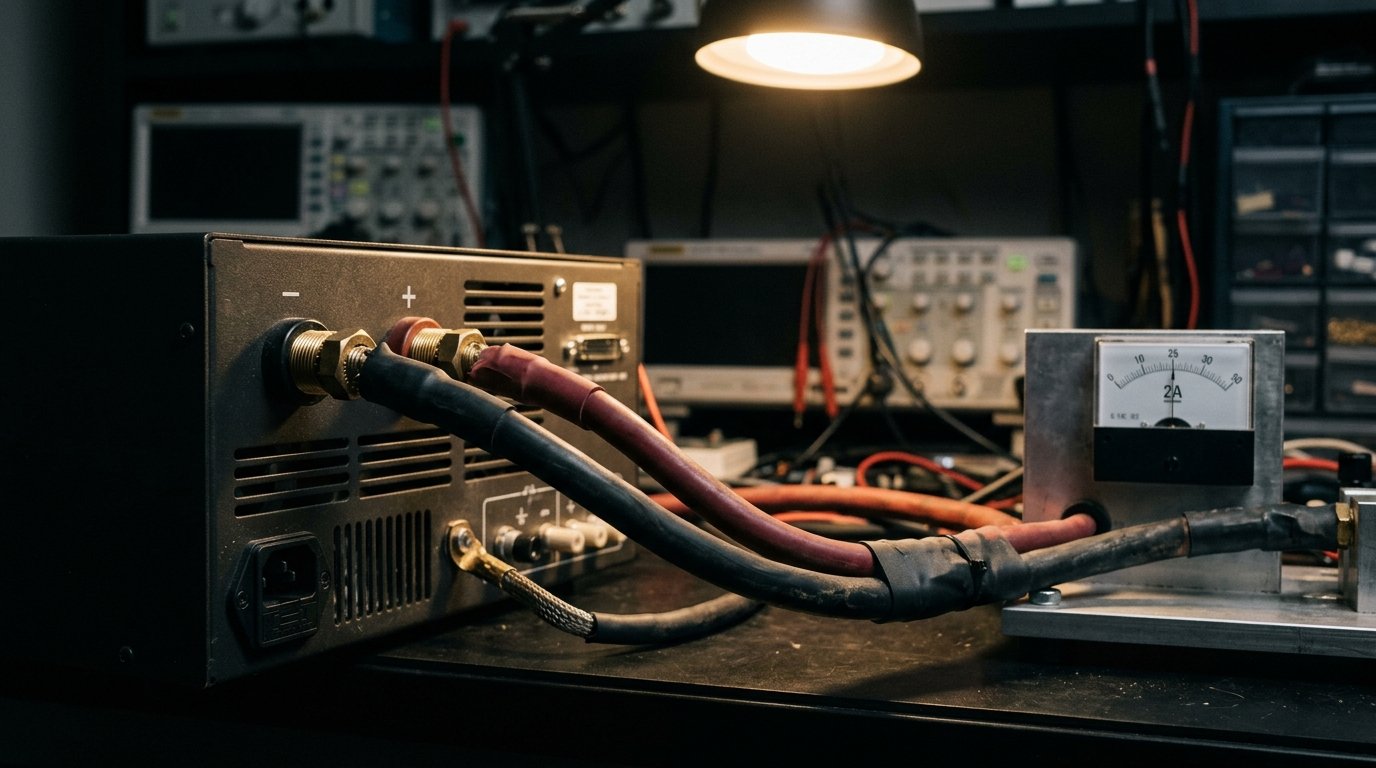
Configuring UltraPower’s 360V–750V Class for an LV123 Pulse
Most LV123 component-level DUTs — DC/DC converters, OBCs, small inverters — sit in the 360V to 750V range. That’s why we pull dV/dt slew-rate and transient-response numbers from the 360 V and 750 V class pages first when a lab asks about LV123 work.
Setting output impedance and bandwidth
To chase an LV123 pulse profile, an applications engineer starts with the voltage loop’s response bandwidth, not the current rating. A narrow bandwidth rounds off the corners of a fast step. The DUT then sees a ramp instead of the edge LV123 specifies. Output impedance gets set low and resistive across the test frequency range. That way the DUT’s own current transient doesn’t sag the rail on top of the commanded step.
In practice, that means checking the datasheet’s step-response plot at the actual load the DUT presents, not at no load. A supply that hits 180 V/ms into an open circuit can slow down once a real DC/DC converter’s input capacitance sits on the rail. We check that number before it goes on a quote, not after the bench is built. Our bidirectional & regenerative DC power supply datasheets list this figure at rated load, not just at no load.
When you spec a bench against LV123 or LV148, confirm these points before you sign off:
- CV dynamic slew rate measured at the actual DUT load, in V/ms — not just at no load
- Sink current rating equal to source current rating, so falling edges are as fast as rising edges
- Output voltage range covering both the LV123 window and the LV148 48V rail, if one bench must do both
- Documented ripple and noise figures at the test frequency, not only at DC
- A response-bandwidth spec you can check against the DUT’s own input capacitance
FAQ: LV123 LV148 Test Power Supply Questions
Are LV123 and LV148 publicly available?
No. Both are OEM-controlled documents distributed to suppliers and test labs under agreement. Public information comes from vendor material — TestEquity’s ITECH write-up and Intepro’s LV123/LV148 page are the two most detailed public sources.
Can a unidirectional supply run any part of LV123?
It can run steady-state load tests. It can’t run the voltage-window steps or power-fluctuation profiles that need a fast falling edge, because it has no sink path.
What slew rate should I look for?
Vendor material cites CV dynamic response up to 180 V/ms for LV123 profiles. Confirm that figure at your DUT’s actual input capacitance, not at no load.
Does one supply cover both LV123 and LV148?
Often, yes, if its voltage range spans both. Check that the auto-range output covers the 48V window inside one continuous span before you assume it does.
Where to Go From Here
If you’re specifying a bench for DC/DC converters, OBCs, inverters or packs against LV123, start with the DUT’s voltage class and current draw. Don’t start with the standard’s title page. Our EV & battery pack test power supply range is built around this work — bidirectional, regenerative, and specified with the slew rate and sink current LV123 and LV148 testing actually needs. →