IEC TS 63379:2026 is the first fixed electrical spec for Megawatt Charging System connectors, inlets and cables. Published in February 2026, it sets conductive DC charging at up to 1,250 V and 3,000 A, for a peak of 3,750 kW — roughly ten times the 1,000 V / 500 A envelope of CCS (ZERA, “What is an MCS test for megawatt charging stations?”). If you’re speccing an MCS charger test power supply this year, that number is now your design target, not a guess.
This isn’t a walkthrough of unit-paralleling mechanics or ISO 15118-23 conformance testing — we’ve covered those elsewhere. Here’s what IEC TS 63379 locks down, what a bench needs to reach 3,000+ A, and what’s still unresolved around MCS metrology.
What IEC TS 63379 Fixes for an MCS Charger Test Power Supply
IEC TS 63379:2026 is a technical specification, not a full charging-station standard. It covers connectors, vehicle inlets and cable assemblies for conductive DC charging in the megawatt range, and it’s the first binding electrical envelope MCS hardware has to meet: up to 1,250 V DC and 3,000 A, for a peak of 3,750 kW (ZERA, “What is an MCS test for megawatt charging stations?”). That’s roughly ten times the 1,000 V / 500 A ceiling of CCS.
For labs, that number changes the shopping list. Before February 2026 you were sizing equipment against a moving target. Now IEC TS 63379 test equipment has a fixed envelope to design against: a source that holds 3,000 A continuous, tracks voltage in bands narrower than CCS-era gear tolerated, and does it while the cable and connector under test stay liquid-cooled and thermally instrumented.
See also: LV123 LV148 Test Power Supply Requirements
Building a 1500V 3000A DC Test Bench
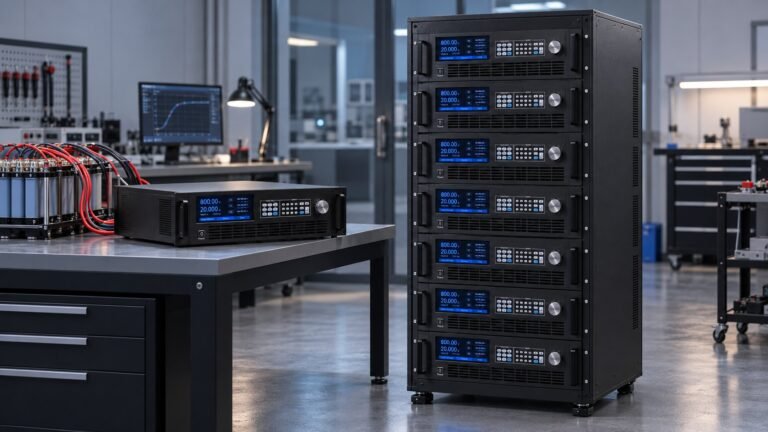
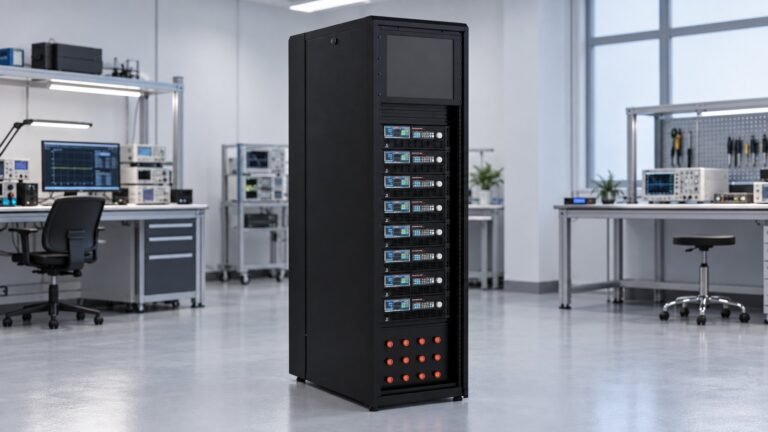
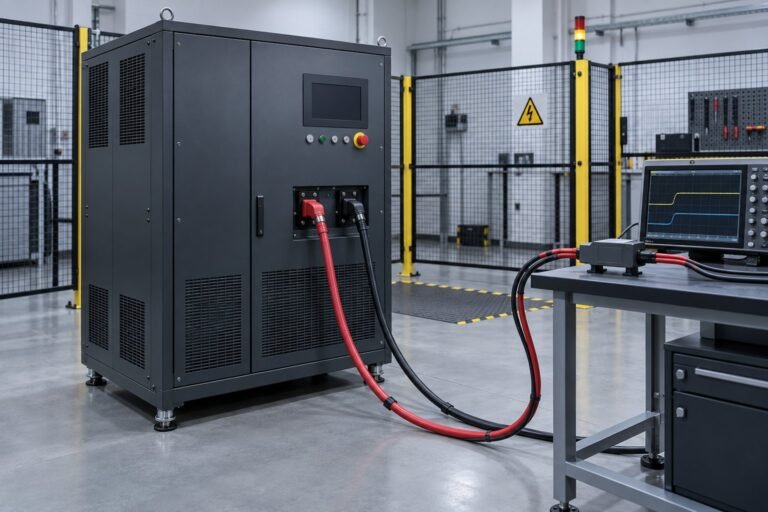
A single 500 kW unit won’t get you near an MCS envelope. Full-current validation calls for a 1500V 3000A DC test bench at minimum, with headroom to 2,000 kW+ so you can sweep a charger’s whole operating map — not just the top corner of the spec.
Combining 1500 V and 2250 V Bidirectional Classes
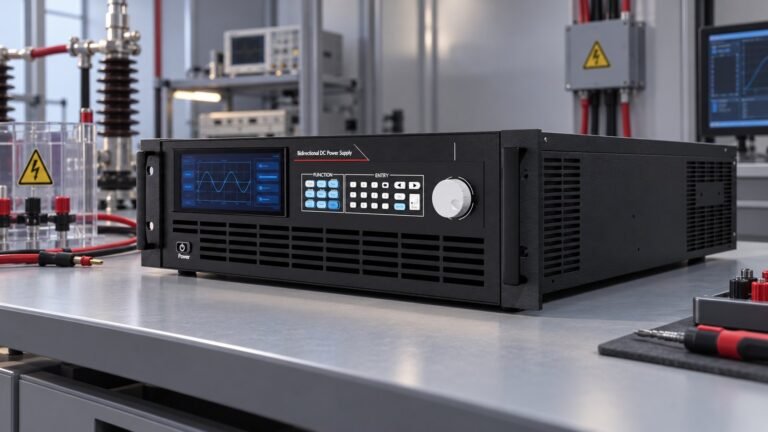
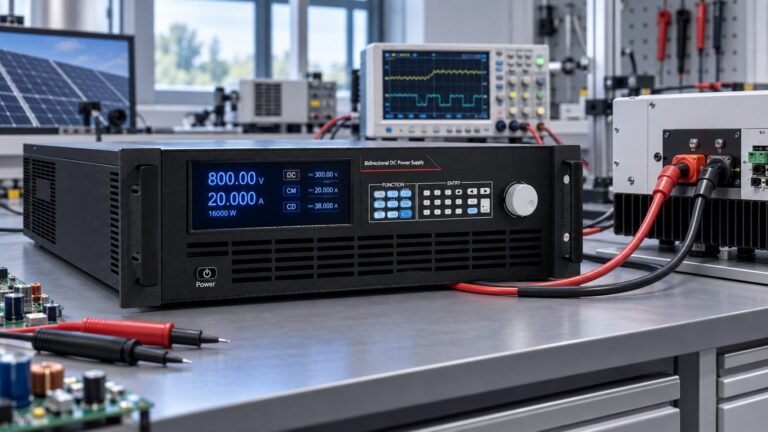
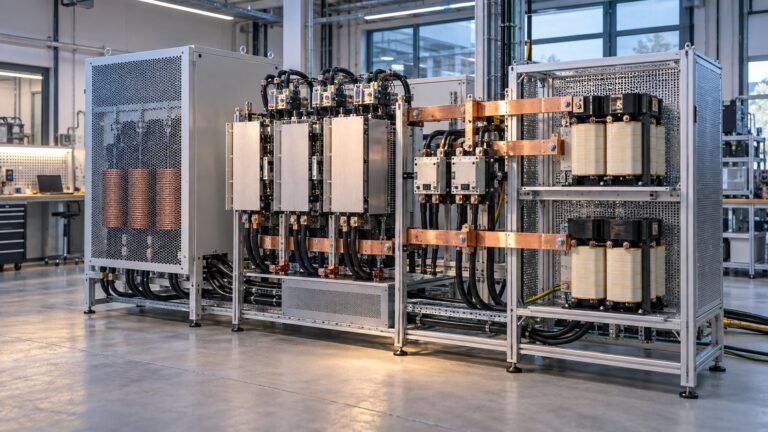
We build these benches from our 1500 V bidirectional DC power supplies and 2250 V bidirectional DC power supplies on a shared DC bus. The 1500 V class covers the working range IEC TS 63379 specifies; the 2250 V class gives transient headroom and room for future MCS configurations without a second procurement cycle. Combined, the bus holds 3,000 A+ continuous with regulation tight enough to resolve the narrow voltage bands MCS low-level communication depends on.
Sinking Regenerated Energy During Charger Cycling
MCS chargers under test don’t sit at one setpoint — they ramp, pulse and cycle through a charge profile a truck battery would demand. Every ramp-down pushes energy back at the source. Our bidirectional classes sink that regenerated energy back to the grid instead of dumping it into resistive loads, at round-trip efficiency above 94% with current-loop response in the low milliseconds. Running 3,000 A cycling tests for hours, that’s the difference between a lab with a manageable utility bill and one without.
Lead time on a bench built to this envelope — paralleled 1500 V and 2250 V racks, thermal instrumentation, regenerative front end — typically runs 14 to 20 weeks from order to factory acceptance test, depending on rack count and site power availability. Specify your grid connection and cooling capacity early; those, not the power modules, usually set the schedule.
IEC 61851-23-3 EVSE Testing and the MW Metering Gap
IEC TS 63379 fixes the connector, inlet and cable. It doesn’t fix everything. IEC 61851-23-3 EVSE testing requirements — the standard covering the charging equipment itself — are still under development, expected sometime in 2026. ISO 15118-20 communication testing for MCS-specific service IDs is also unresolved. That makes 2026 a bench-sizing year for MCS, not a certification year: you can build and validate against the fixed electrical envelope now, but full EVSE conformance testing waits on 61851-23-3.
There’s a second gap that matters more if you plan to bill for MCS energy: metering. ZERA’s analysis is direct on this — no manufacturer currently ships a legally compliant DC meter for MW-range outputs, and that’s holding back full rollout (ZERA, “Megawatt Charging – Requirements for Testing Technology”). If your test programme includes energy-metering verification, expect the reference chain to change before your bench is fully proven in. Build the metrology interface as a swappable module, not a fixed component.
See also: EN50530 & Sandia: PV Inverter MPPT Test Standards
IEC TS 63379 Test Equipment Checklist for 2026
Before you spec a bench against the new envelope, confirm it covers:
- Power scaling from 500 kW entry configurations to 2,000 kW+ for full-map testing
- Continuous operation at 1,250 V / 3,000 A, regulated inside bands narrower than CCS-era supplies held
- Integrated thermal monitoring on the connector and cable under test, not just the source
- A regenerative front end that sinks energy during charger cycling instead of dissipating it
- A modular metrology interface, ready for updated DC metering references
- Headroom into the 1500 V–2250 V range for transient and future-configuration testing
FAQ
What voltage and current does IEC TS 63379 specify for MCS?
Up to 1,250 V DC and 3,000 A, for a peak power of 3,750 kW (ZERA, “What is an MCS test for megawatt charging stations?”). That’s the fixed envelope your MCS charger test power supply needs to reach.
Can you certify an MCS charging station in 2026?
Not fully. IEC TS 63379 fixes the connector and cable spec, but IEC 61851-23-3 EVSE testing and ISO 15118-20 communication testing are still pending. Treat 2026 as the year you size and validate the bench, not the year you close out certification.
Will a CCS-era test bench cover MCS testing?
No. CCS-era gear tops out around 1,000 V / 500 A. MCS needs a 1500V 3000A DC test bench as a baseline, plus thermal monitoring and regenerative capacity a CCS bench was never built for.
How long does a bench sized for this spec take to build?
Typically 14 to 20 weeks from order to factory acceptance, for a paralleled 1500 V / 2250 V configuration with a regenerative front end and thermal instrumentation. Site power and cooling readiness usually set the actual schedule, not the power modules.
Sizing Your Own MCS Charger Test Power Supply
IEC TS 63379 has given you a fixed number to design against — 1,250 V, 3,000 A, 3,750 kW peak. The metering and EVSE-testing standards around it are still catching up, but your bench doesn’t have to wait on them. Check full specifications and configurations on our EV charger test power supply page, pull reference data from Downloads & Datasheets, or get a bench sized to your MCS test programme → Request a Quote.